
“It’s a dangerous business, Frodo, going out your door.”
Bilbo spoke the truth. When I step out my door, I’m swept out into the garden first thing in the morning only to return for reluctant spells that are as short as I am able to keep them. As I write, I’m in the garden soaking in inspiration and fighting to stay put and share these words with you.
Let’s get to it! (Dates correlate to USDA Zone 8b, Willamette Valley, Oregon.)
Cool Season Crops

Leafy greens, peas, broccoli, beets, chard, etc. 🥦 🥬🥕
These should be showing some real growth and vigor at this point. Watch for yellowing leaves and use a nitrogen rich, liquid fertilizer should you notice the older leaves yellowing. (Assuming the water is adequate.) Nitrogen is a mobile nutrient and the plant will draw nitrogen from older leaves to support the younger ones. Obvious yellowing in the older leaves is a sign that it is struggling to get enough. Nitrogen demands are high during this period of rapid growth and the root system might not be mature enough to meet those needs. Liquid fertilizer is easily taken up and put to use, whereas powdery organic fertilizers take longer to break down.
If your spinach and other leafy greens are looking robust, try the cut-and-come-again method of prolonging the harvest and getting fresh tender leaves for your salad bowl.
Thinning
- Carrots: Use scissors to snip to the soil line. Remove all but one within a two inch radius.
- Beets: Each beet seed contains three or more plants. Weird right? You are guaranteed to need to do some thinning. Gently pull or snip the extras so they each have about three inches of space. Then saute up the greens for a tasty lunch.
- Lettuces: Gently pull extras so each has about a six inch radius.
- Kale: These get so big that I try to give them a 6 – 12 inch radius.
- Chard: Is actually a type of beet that doesn’t bulb. They have multiple plants per seed too. Thin all but one and give about a six inch radius.
- Broccoli: Clip with scissors to one plant per one foot radius.

Three beet plants in one seed. 
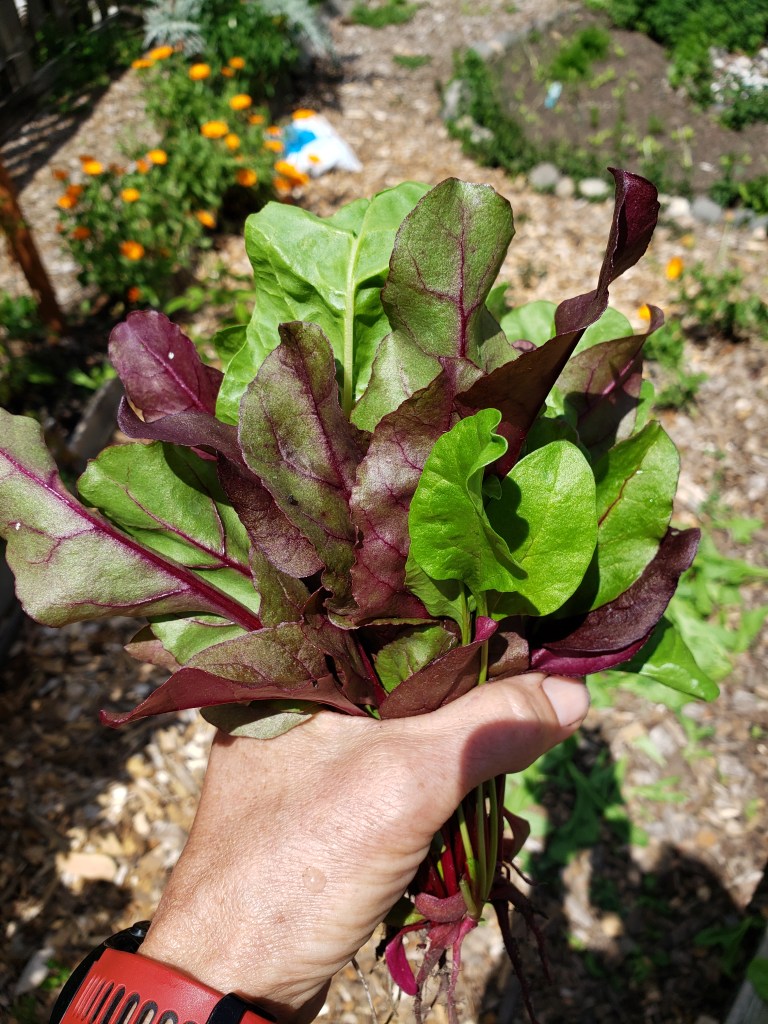
Saute up for lunch!
Warm Season Crops
Tomatoes, eggplant, peppers, melons, squash, cucumbers 🍅🥒🍉🌶️

Yes! 51 degrees in the early AM 
Pumpkins are in the cucurbit family. 
Plantable pots are idea for them.
Wait until after Mother’s Day 🏵️ and check the soil temp in the early morning. If it is above 50 degrees, you should be good to transplant your crops into your garden beds. All of these appreciate a cloche at night time.
- Dig a hole as deep as the pot.
- Mix in a little organic fertilizer and blend with loose soil.
- Sprinkle some fresh soil in the hole. (So roots aren’t in direct contact with the fertilizer.)
- Remove from the plastic pot and gently open any circling roots. (Except cucurbits—they have sensitive roots.)
- Place the plant in the hole and scoop back the soil.
- Press gently to remove any large air pockets.
- Encircle your plant (top dress) with a little more organic fertilizer.
- Water in with lukewarm water that is spiked with liquid fertilizer. Seems like a lot, right? But only the liquid fertilizer is available right away. Microbes have to work to break down the organic, dry stuff.
Cucurbits Tips (melons, cucumbers, squash🍉,🥒, 🎃)
- Don’t break up pot bound roots. These plants have many delicate root hairs and don’t recover well from root disturbance.
- This plant family is happy to climb a trellis, which can save you space and maximize sun exposure and air flow, both of which will help stave off powdery mildew.
Nightshade Tips 🍅🍆🌶
Tomatoes and other nightshades are one of the few crops you can plant deeper than they were in the pot. All the bumps at the base of the stem will become new roots to support the plant’s growth and fruit production. Go as deep as you want with tomatoes, less so with eggplants and peppers.
Secrets for Growing Slicing Tomatoes: A season extender like a hoop-house or greenhouse is ideal for big, warmth loving tomatoes. However, up at Edible Stories Market Garden, they are able to get a good set of slicing tomatoes outdoors too. The secrets: choose an indeterminate variety and train on a trellis that has full sun and faces south. Keep up with pruning suckers. (Branches that grow out of the joint of other branches.) Use a dark mulch like compost to keep the soil warm. Pick fruits just before they ripen to encourage them to keep giving.
Perennials Veggies and Herbs
The longer I garden the more I appreciate these plants. They usually put out their harvest while the other garden vegetables are only a few inches tall. They become more beautiful and vigorous every year even though I do little else than harvest and enjoy them.

- Asparagus: You’ve probably already gotten your first harvest. Be sure to leave a few of the strongest spears to form fronds. I love seeing my hummingbird friends perching on them.
- Artichokes: These are ready for harvest when the bottom leaves begin to pull away and the tops aren’t super tight. Try to leave one bud to flower. I love the way bumblebees disappear into the flower.
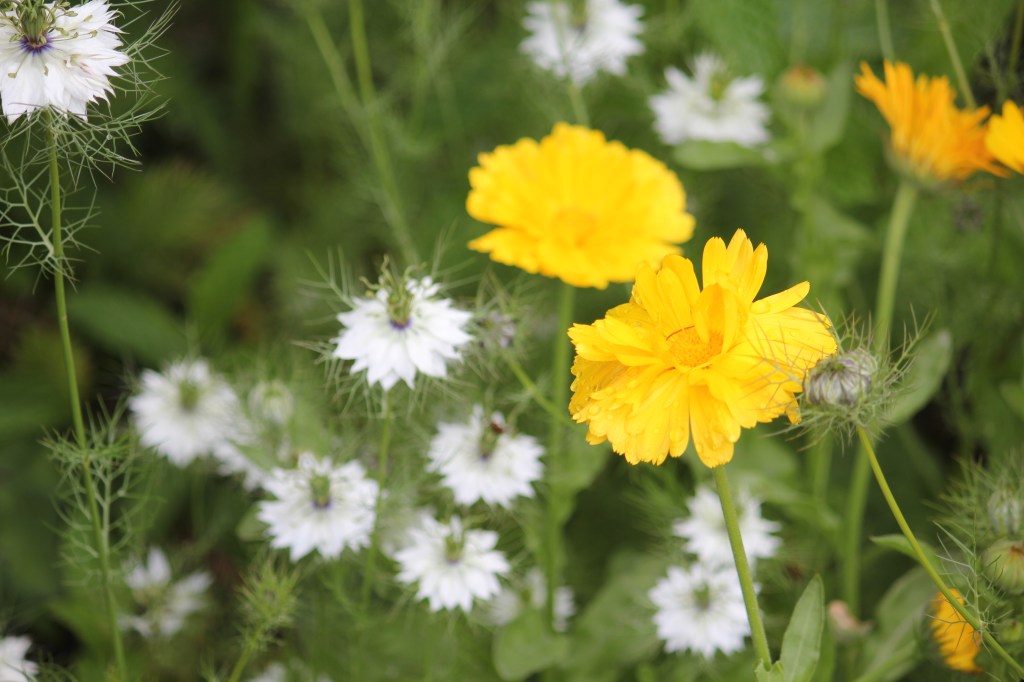
- Calendula: Harvest the flowers. Pull the petals to add color and spice to your salads and cooking. Dry whole flower heads to make soothing oil infusions. Read more about the wonders of this beautiful flower.
- Culinary Herbs: Rosemary, thyme, sage, oregano, mint, lemon balm, et. al., are all in their full glory by May. Harvest them at will. Hang to dry or use a food dehydrator. Soon they will go to flower and their flavor won’t be quite as nice. Take more than you think you’ll need. Once you spoil yourself with homegrown herbs, it’s difficult to go back to paying for grocery store herbs. Herbs are one of my biggest money savers. Deer don’t like them, they have almost no pest problems, pollinators love them, they generally like nutrient poor soil, and are drought tolerant. Truly, one of my favorite crops.
- Cane Berry Leaves: Red raspberry and blackberry leaves make a wonderful mineral rich tea. To me it tastes like green tea. Try my signature tea blend: Blend dried red raspberry leaves with peppermint (and later) lemon grass, and chamomile flowers for a relaxing and mineral rich tea. Again, make more than you think you’ll need. No matter how much I do, I’m out by winter.
Fruiting Shrubs & Trees 🌳

There are six baby apples on this one fruiting spur. 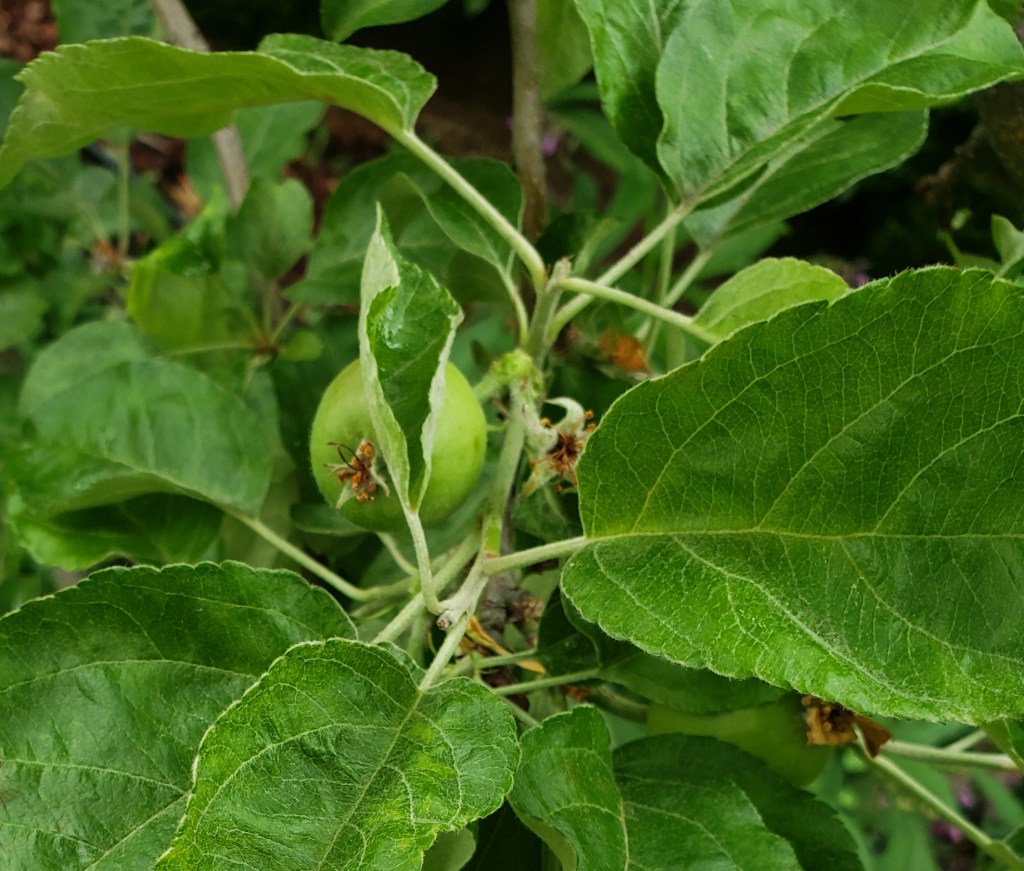
Thin to one. 
To ensure a good harvest you have to throw out about 80% of your baby apples. Weird, right?
Blueberries
Add another application of blueberry fertilizer and ensure they get consistent water.
Apple Trees
Thin your fruit. When the apples are about dime sized, thin each spur to one apple per spur. Also, ensure that there is at least a hand span between fruits. Whenever my apples touch there’s usually something in the middle spoiling both of them.
Fertilizer: I have comfrey planted in my fruit tree guilds. This time of year I like to chop and drop the leaves for fertilizer then cover them with wood mulch. Ensure mulch doesn’t touch the tree truck. This can cause trunk rot.
Prune any root suckers that pop up. Prune any broken branches.
Elderberries
These should be developing flower heads and getting ready to bloom. As with the other fruit trees, I chop and drop comfrey then refresh the wood mulch. Prune away broken or dead branches.
Raspberries
I have primocane fruiting (a.k.a: everbearing) raspberries, so I don’t top them. Other raspberries like to be topped when they are about 6 feet tall. Mungers (black raspberries) will send out side shoots and put out plenty of berries.
Blackberries
I generally don’t have to do a lot to my berries this time of year other than removing suckers and keeping them on my side of the fence line. Thanks neighbors for putting up with my garden exploring your property!
- Semi-erect and erect blackberries like triple crown like to be topped to encourage lateral growth. Mine are already pruned this way, but any new growth will get this treatment too.
- Trailing black berries like marionberries, tayberries should not be pruned and should already be wrapped around a trellis. They should be blooming and getting ready to fruit. This year’s new canes will run along the ground. Keep two or so to train around your trellis next January or February.
Strawberries🍓
Strawberries love straw mulch. It keeps the soil cool and moist, and keeps the berries off the dirt. If I can find it, I’ll apply in May. Be sure it is unsprayed. Broadleaf herbicides are commonly used to raise hay and cereal crops. The residues will harm your garden plants and stay potent in your soil for up to two years. (OSU Extension – Herbicide Carryover)
June bearing strawberries like Hoods like to form a thicket. Allow them to run and reproduce and just trim away any runners that are jumping out of the bed.
Everbearing strawberries like my favorite Albion prefer to be individuals. To get good berry production, cut the runners and either plant them in another spot, or pot them up and share with your friends and neighbors.
Lawn Care
If your lawn is showing bare patches, there’s still time to reseed. Scratch up the soil, drop your seed and keep it moist until the new grass is established. It’s easier to get this going before the summer heat and dry weather arrives.
Other Tips for a Healthy Lawn
- Cut on a high setting, at least 3″. Taller grass keeps the soil cool and moist, shades out weed seeds, and has longer roots to bring up water and nutrients.
- Use the mulch setting. The lawn clippings break down fast (clippings don’t become thatch) and recirculate nitrogen into your soil reducing the need to do more costly fertilizer applications.
- Irrigate early in the morning. Check your weekly watering number on the regionalh2o.org website.
- Memorial Day is ideal for your first application of lawn fertilizer.
- For more, read my Turfgrass Growing Guide.
Pest Control
Slugs and garden snails are still going to be issue until about June, when plants are big enough to sustain some damage and the environment dries out and heats up. My Slug IPM Guide has lots of solutions for you to choose from.
Aphids


on an apple leaf.
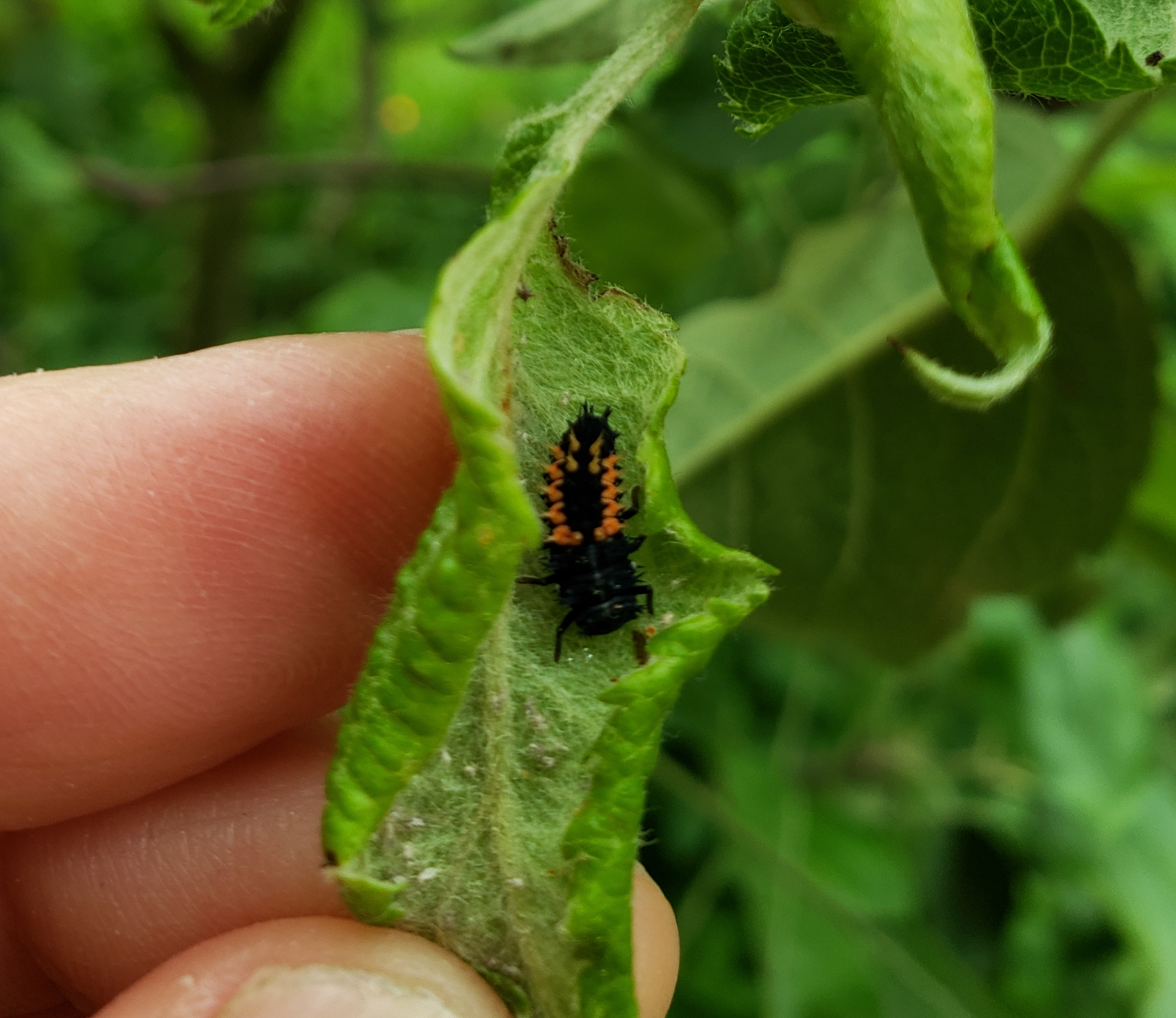
Are so gross. But to many predatory insect and birds they are a yummy buffet.🕷🐞🐦 For this reason, I don’t treat them. Instead, I watch and wait. When an infestation really gets going, I’ll start to find little clutches of yellow eggs. Ladybug eggs!🐞The larvae hatch and will go to work on the aphids immediately. Birds are also nesting in May and aphids are easy prey for bird parents to bring back to their babies. Truly, aphids are the plankton of the the garden ecosystem.
If you are concerned about your plants dying from them, there are many ways to treat them without toxins, the best advice is just to spray them off with water or smoosh them with your hands. (Check for a clutch of ladybug eggs first. Ladybug larvae have big appetites!)
Calendula and nasturtium flowers make a wonderful trap crop. Aphids prefer them to your vegetables and provide predators with an all-you-can-eat buffet.
Leaf Miners


These guys love succulent beet greens, chard, and spinach. They burrow into the layers of the leaves and leave a visible trail. On these crops I control them by turning the leaves over and smooshing the egg clutches, cutting off leaves with a larvae in them, and harvesting their favorite crops early. Row cover is an effective prevention method too.
Cabbage Moth Larva 🐛
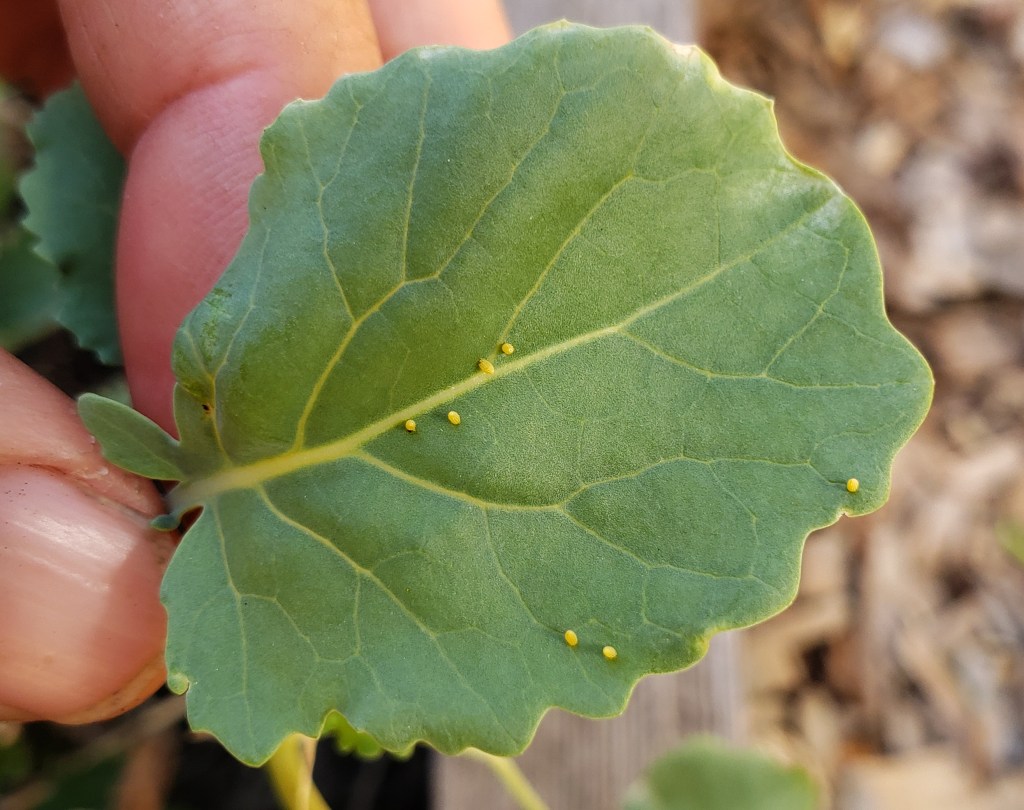
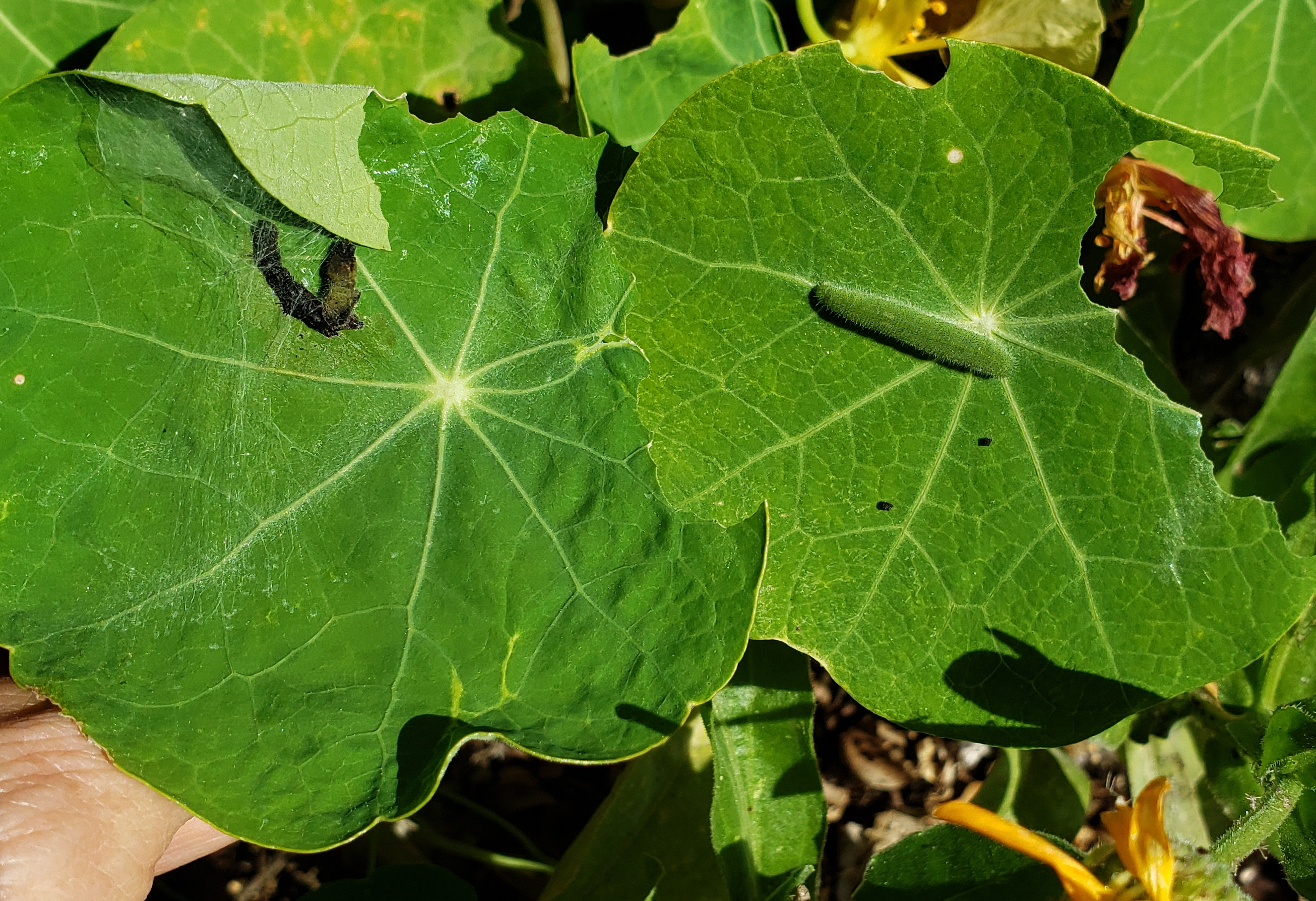
These are easy to find because of the big holes they leave in your brassicas and nasturtiums. In general, I leave them for the birds and spiders. However, if there are no nearby webs and they seem to be overwhelming my plant, I will pick them off and toss them into the middle of the wood mulch where the birds can find them easily. They are not very mobile and will likely not find their way back to your broccoli plant. If I’m monitoring them regularly, the their tiny eggs are easy to spot and brush off. People with large gardens will sometimes use a floating row cover (a gauzy white material) to restrict moth access to the crop. Lay it over your crop and secure the edges. Most people remove the cover once the crop is well established and can sustain a bit of munching.
Pest Control Philosophy at SBG
My first step, is invariably to wait and see. Many pest species are a primary food source for other wildlife. They just need a minute to move in and solve my problems for me. If I must intervene, hygiene, flinging, and spraying with water is about as aggressive as my pest control measures get. If that fails and a chemical control (the synthetic and toxic kind) is necessary, then I shrug it off and leave it to fend for itself. I don’t see the logic in spending money to risk my health, and the health of the ecosystem to grow something I can do without. And since I have more plants than I have space…opportunities abound!
Backyard Bird Care 🐦

Anna’s Hummingbird on asparagus frond 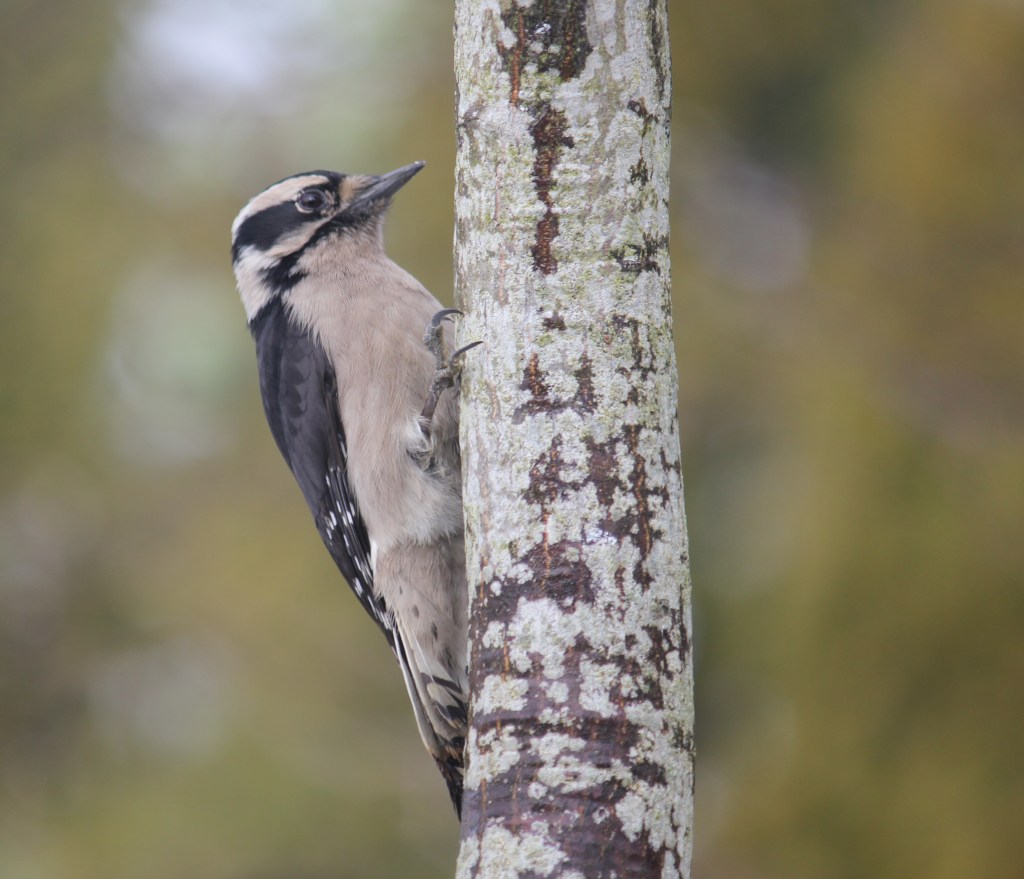
Downy woodpecker 
Scrub Jay inspecting the bird bath
Bird are Nesting🪺
It is bird nesting season so hold off on any further tree pruning until summer. Hummingbird nests are so tiny that you may not notice them. If you’re lucky you will hear peeping and busy bird parents shuttling food to their nests. Often this food consists of garden pests! So please be extra cautious about spraying.
Bird Feeders
It’s still cool enough to provide suet for your bird friends, which is my go-to since it’s not as messy as the seed feeders that bring in mice and rats. Continue to clean and refill suet cages, finch socks, and hummingbird feeders every week. There’s lots of forage for most birds this time of year, so if you need a break don’t feel bad about taking them down. Take down suet feeders when temps rise to 80 degrees or more.
Birdbaths
A water source can bring more feathered friends than a feeder. Clean and refill every few days and you’ll be rewarded with entertaining baths and more bird visits. For a super easy clean, I flip my hose nozzle to jet and spray all the water out which also removes any gunk. Then I flip it back to shower and refill. A little elbow grease and a scrub brush once a month will help keep the slime out.
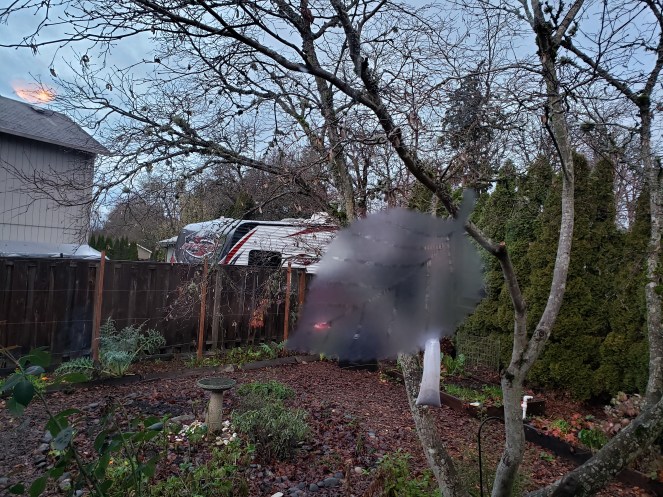
Just a blurry spot to us. 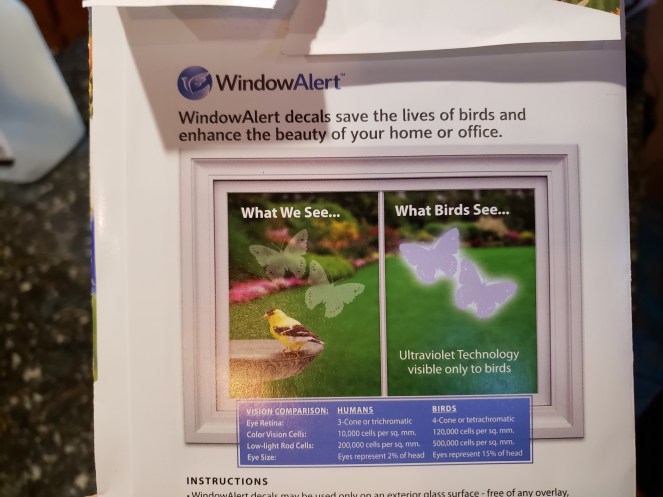
But stands out to birds.
Bird Safety
Window strike stickers are a great way to illuminate windows so your bird friends can see them.
If you see a cat stalking your bird friends, it’s best to take down your feeders and baths for a while.
Further Reading
- Portland Audubon – Make Your Yard a Haven for Early Nesting Birds
- Portland Audubon – Tips for Reducing Window Strikes at Home
- OSU Extension – Herbicide Carryover in Hay, Manure, Compost, and Grass Clippings
- OSU Extension – Growing Blueberries in the Home Garden
- OSU Extension – Growing Raspberries in the Home Garden
- OSU Extension – Growing Blackberries in the Home Garden
- OSU Extension – Growing Strawberries in the Home Garden
 Second Breakfast Gardens