

Willamette Valley, Oregon, USDA Zone 8b
Sweet warmth and sunshine🌞🌱
If you are in zone 8b with me, then you’ve noticed everything waking up. I’m waking up too. I get up earlier and have more energy, which is great because it’s time to do pretty much everything. ☕
Garden Beds
If you haven’t prepped your beds yet, check out my easy guide. If you have prepped your beds, but have yet to plant in them, give them a good once over with a scuffle hoe to loosen the top ½” of soil and to remove any weeds that are germinating. If you’ve struggled with weed control, give the stale seedbed method a go.
Stale Seedbed Method of Weed Control
This method decreases the bank of weed seeds in the soil by coaxing them to germinate then scuffling them under repeatedly. Try to start a few weeks before planting, but even one cycle will give you and your plants a good head start against vigorous weeds.
- Begin by running a scuffle hoe over your beds.
- Keep soil moist (our usual rain does this) to germinate the weed seeds that were churned up.
- Give them a few days to a week to pop, then scuffle hoe them down. This also churns up new weed seeds.
- Let them germinate then scuffle hoe them down again.
That’s all there is to it. Now you should be able to plant in your beds with vastly diminished weed pressure.
What to Sow this Month
For a bigger picture of what to start when see my Planting Guide.
Direct Sow

Soil temp: 40+ degrees
- Beets
- Broccoli
- Cabbage
- Carrots
- Kale
- Lettuces
- Onions
- Potatoes (soil temp: 45+ degrees)
- Spinach
- Swiss Chard
For herbs and flowers you can direct sow: alyssum, calendula, chamomile, cilantro, garlic chives, nasturtiums, and most other annual flowers.
If you haven’t already, it’s still OK to direct sow peas and radishes.
Start Indoors

Pumpkins, like other cucurbits, have delicate root hairs. They love being started in plant-able pots like these. 
Sometime in May, plant the whole thing. Once in the soil and moistened, roots have no trouble breaking through the pot when they are ready.
All of the following crops are in the cucurbit family. Cucurbits are warmth-loving and vigorous growers. To give you better odds of success, use plantable pots to minimize root disturbance. Cucurbit roots are fibrous with delicate hairs that are essential for vigorous growth.
- Cucumbers
- Melons
- Pumpkins
- Squash
Hardening Off
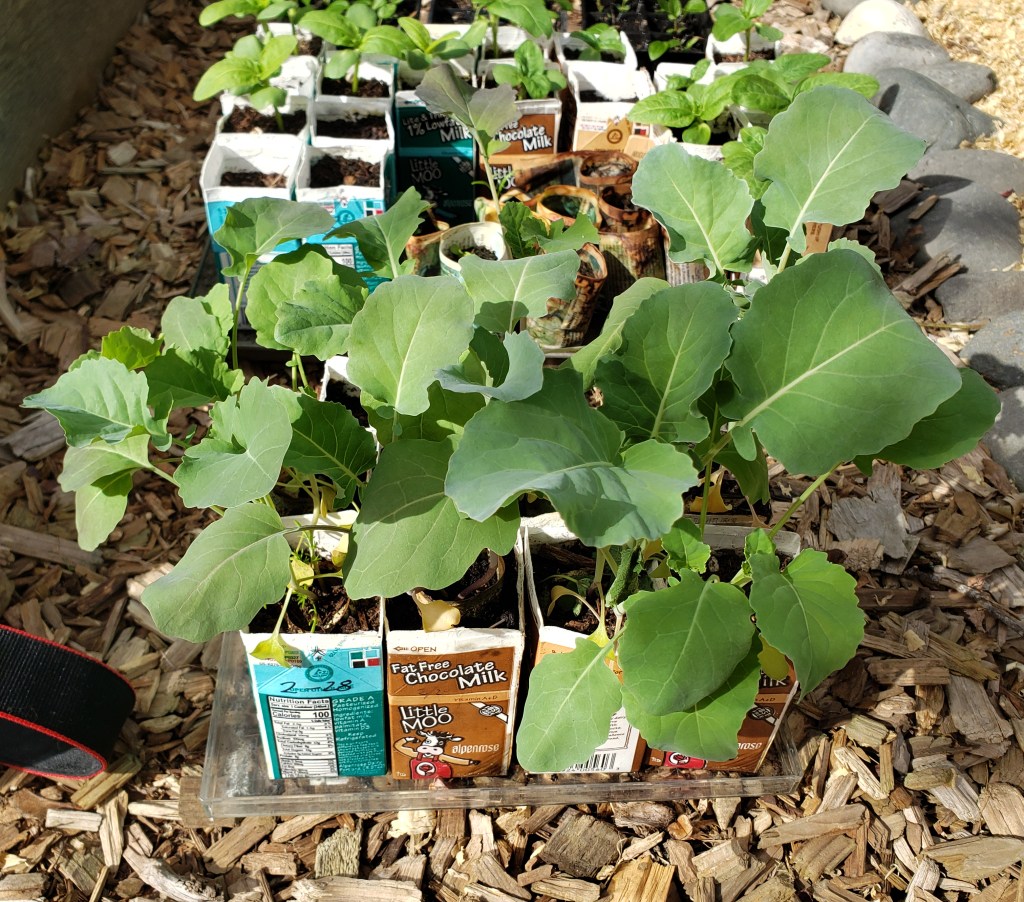
It’s almost time to transplant some of the broccoli, arugula, onion, and other cool tolerant crops that got a head start inside. To get them ready, they need to acclimate to the rigors of the great outdoors. To get this process going, carry starts outdoors for an hour or two. Dappled light is the gentlest. Then slowly increase the time they spend outside for at least a week. Two weeks is even better. Check in on them to watch that they don’t dry out or blanch in direct sunlight.
The sun, wind, and temperature stresses stimulate a response in the plant that hardens their cell walls preparing them for rigors of outdoor life. This vastly increases your odds of transplanting success. Try not to be discouraged if a few die in the process, they probably wouldn’t have made it in your beds either.
Pest Control
Know thy enemy. 
Cabbage moth larva. The one on the left is being eaten by a spider. 🕷 Birds love them too, especially during nestling rearing season. I only remove them if the plants is overwhelmed. Then I leave them out of the birds. 🐦🐣
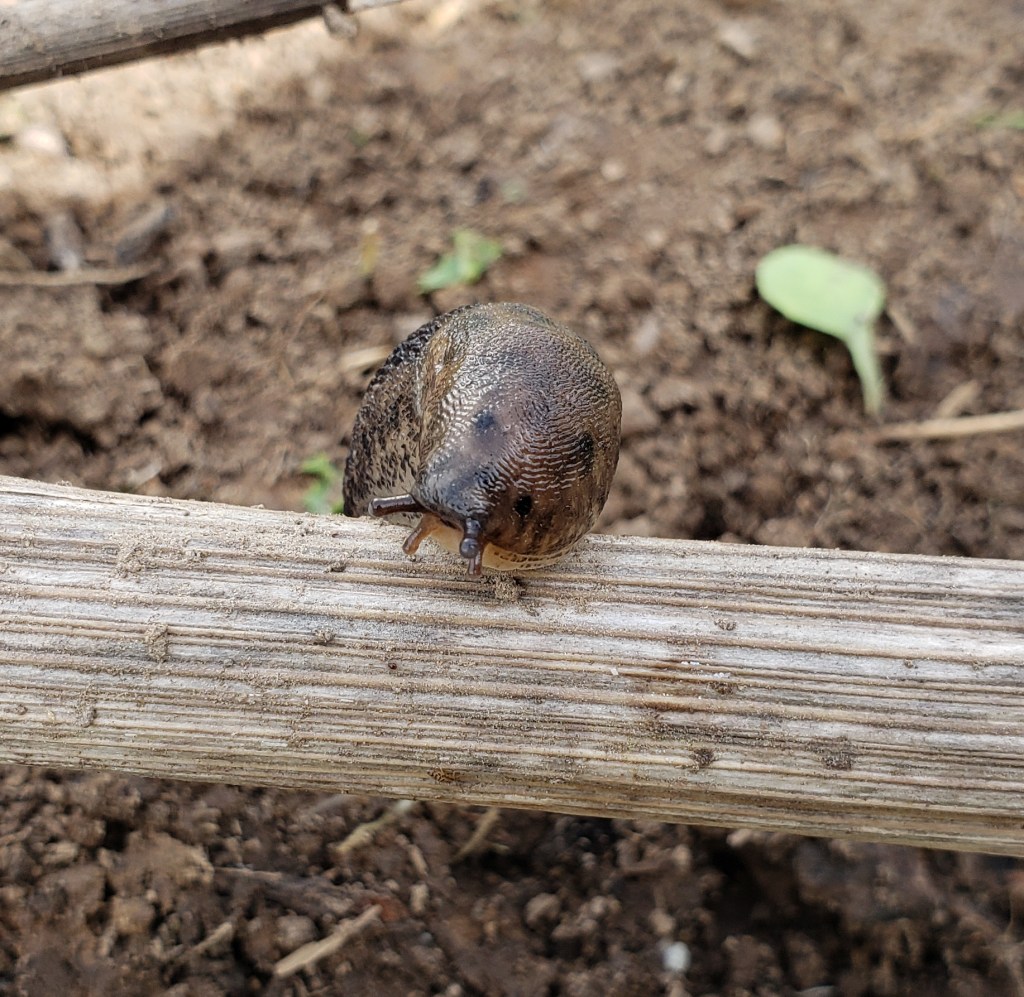
Your garden is at its most vulnerable when the seedlings are young and tender. Garden slugs rise from the crevices of the earth to mow them down. And there are also leaf miners, cabbage butterflies, oh my!
Slugs are my #1 nemesis and I have created a full Slug IPM plan to keep their hoards from ravaging my crops.
For the flying insects, (cabbage moths, and leaf miner flies) you can use a floating row cover to keep mother bugs from laying eggs on your transplants. The cloth is gauzy, allowing light and air exchange. Weight the edges down and check underneath occasionally to make sure nothing got under there when you weren’t looking.
While these critters can be annoying for sure, once my plants are established I let nature do her thing. The birds🐦and spiders🕷 generally eat pests within a few days and the plant survives without obvious detriment to the harvest. I once saw a robust black spider feasting on a moth larvae, half of it was blackened and empty and the other half was still bright green. I gave her a high-eight and left her alone. If I want to keep these predator insects around they need to have a reliable source of food. I only intervene and pick them off if the plant is valuable to me and being fatally denuded. With the crash of insect populations world-wide I take the less-is-more approach to overall ecological health and value of my yard.
Cane Fruits
All your cane fruits, blackberries, raspberries, etc, should have plump flower and leaf buds ready to break at any moment. This signals that they are going to need a boost of a well balanced fertilizer to support that lush growth or add a well rotted manure or compost.
As usual, Blueberries are the opposite. They do not want compost or manure which can be too salty for them. Instead fertilize with a specific acidic fertilizer that will provide the nutrients they need and keep the pH low. The boxes will usually be labeled for blueberries, azalea, or rhododendron. For mulch, stick with pine shavings or conifer sawdust.
Lawn Care
You have probably already mowed your lawn a time or two. April is a good time dethatch, core aerate, and reseed. OSU Extension service recommends choosing a perennial ryegrass. It’s too early to fertilize though and in our wet spring most of the nitrogen rich fertilizer will either run-off as pollution or leach down into deeper soil horizons out of the reach of shallow rooted turf. Either way, that stuff is expensive. To find out more about how and when to fertilize your lawn, check out my turfgrass growing guide.
Other Tips for a Healthy Lawn
- Our Turfgrass Growing Guide has details and advice for growing the greenest grass in your neighborhood—without a lot of expensive chemicals.
- After adding grass seed, keep your lawn moist until the seed germinates and becomes established. (Through July.) If you have bare patches, scratch up the soil with a hand cultivator, add compost, and sprinkle in seed. Compost will hold moisture and provide nutrients.
- Cut on a high setting to maintain a deep root system. (No shorter than 3″.) You may have to mow it again sooner, but your lawn will thank you by becoming a lush carpet.
- Follow the 1/3 rule: take less than 1/3 the grass’s total height. A common springtime mistake is to scalp your lawn by mowing tall grass down to an inch or less. This removes its food supply and shocks the plant causing root die-back.
- Use the mulch setting on your mower. Lawn clippings break down fast, recirculating nitrogen into your soil. This significantly reduces the amount of nitrogen we need to apply throughout the growing season. It also helps break down thatch, and builds soil humus. Less work, means more time for tea.
🐦🦋Wildlife Care🐞🐝
Yard Cleanup – Go for it!

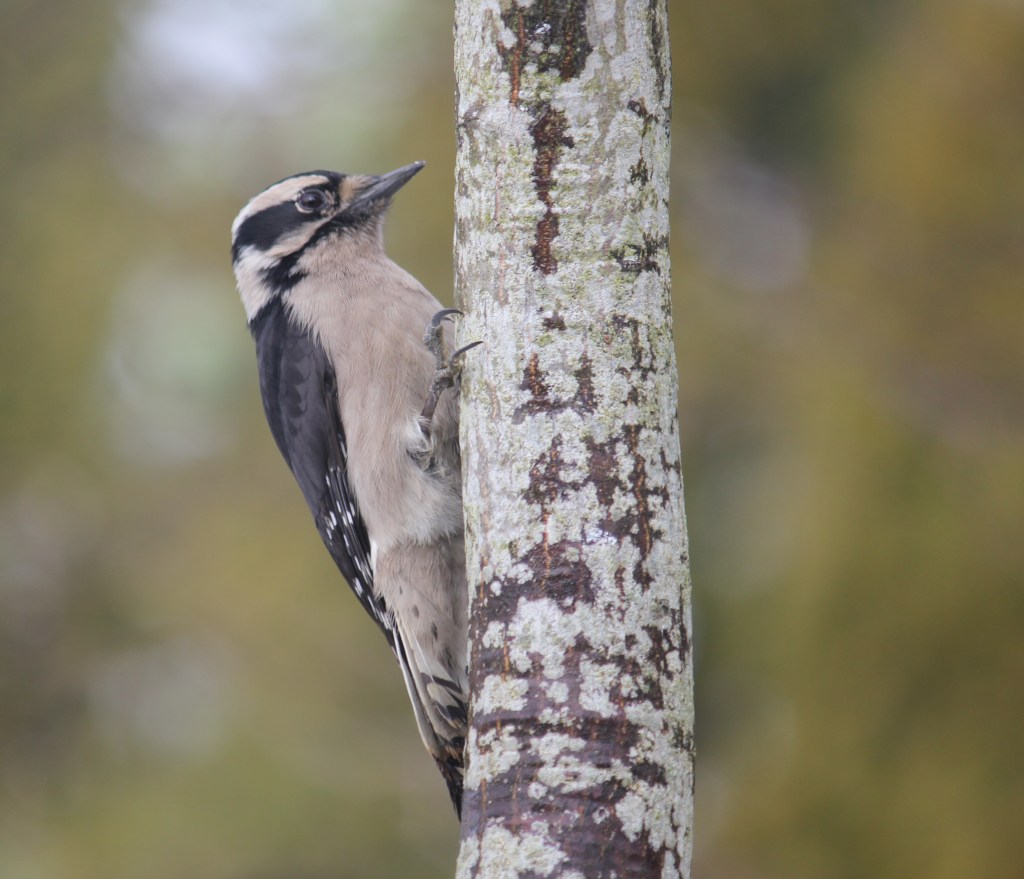


Since our temperatures are rising above 55 degrees, most of our native insects, including our beloved mason bees, should have emerged by this time. It is now safe to do a thorough yard cleanup. Cut back any old stems and other chaff and leave about 1/2 height for this year’s bugs to use. When your plants spring up, it covers the old stems.
Perennial grasses can be cut back to regrow. If you want to attract mason bees, include some plants that flower in late March and April so they have forage when they emerge hungry in those first 55 degree days. Some good ones: Oregon grapes, calendula, dandelion, red flowering currant, maple trees, spring ephemeral bulbs, and more. Also leave some exposed clay soil, like a small hole, to allow mason bees and other animals to access clay for nest building.
Birds are Nesting 🐦🪺
It is bird nesting season so hold off on any further tree pruning until summer. Hummingbird nests are so tiny that you may not notice them. Like an espresso cup with a few jellybeans.
Bird Feeders
It’s still cool enough to provide suet for your bird friends, which is my go-to since it’s not as messy as the seed feeders that bring in mice and rats.🐀Continue to clean and refill suet cages, finch socks, and hummingbird feeders every week. There’s lots of forage for most birds this time of year, so if you need a break don’t feel bad about taking them down.
Birdbaths
Clean and refill every few days and you’ll be rewarded with entertaining baths and more bird visits. For a super easy clean, I flip my hose nozzle to jet and spray all the water out. Then I flip it back to shower and refill. (A good scrub now and then is still a good idea.) If you have a glazed bird bath, add some cleaned rocks to the basin to provide traction and to prevent insects from drowning.
For Further Information
- OSU Extension: Practical Lawn Establishment and Renovation
- OPB Video featuring Ron Spendal: Here is Why the Magical, Mysterious Mason Bee is a Gardener’s Best Friend.
 Second Breakfast Gardens
2 responses to “April”
How’s your luck with carrot seed starting? I’ve had such weird results – one year none of the seeds germinate, other years it seems like more carrots grow than seeds I planted. Maybe it’s my soil? I don’t know, but I consider carrots my one big challenge of the spring :)!
LikeLike
Agreed! They are quite temperamental.
The seeds don’t stay vigorous for very long, so do get fresh seeds every year. (Usually not a problem, since we all plant a lot and sometimes spill those tiny seeds everywhere–or is it just me.)
Last year, I planted them late in the season, mid-May, I think. And I had a GREAT growing season. The struggle was keeping the seeds (and seedlings) moist. But then they were amazing. Ensure your soil is well draining, light, and loose (on the sandy side is great.) I have one raised bed that I’ve amended with extra sand and plenty of organic matter.
Also make sure they don’t get too much fertilizer (or any really) for good tap root development.
Let me know how it goes! I hope this year will be one of the gangbuster years for you.
LikeLike